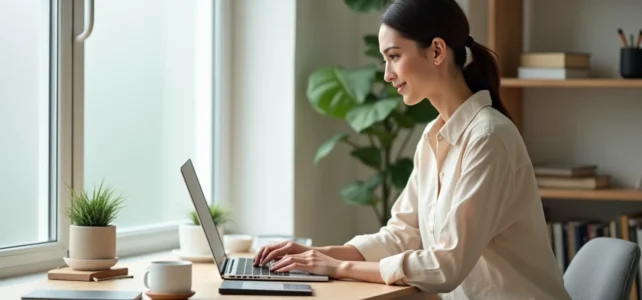
Setting up a workspace at home is no longer just about placing a computer on the living room table. With the rise of remote work, the home office has become a permanent function of the home, not a temporary fix. The question is no longer whether you need a workspace, but how to design it to support your focus without compromising your living environment.
Home Office and Thermal Constraints: A Blind Spot in Design
The temperature of a room directly affects concentration levels. An office located in the attic or facing a south-facing bay window can become unusable for several weeks a year as temperatures rise.
During heatwaves, Anact reminds us that the prevention of heat-related risks also concerns remote workers. Before choosing the location of your workstation, check the room’s solar exposure and the possibility of ensuring proper ventilation.
A blackout blind, a quiet fan, or simply choosing a north-facing room can transform the sustainability of your setup. The location of the desk is also determined by the thermal conditions of the home, not just by the available space.
Resources like happyspace.fr allow you to explore interior design solutions tailored to the real constraints of a home, including thermal comfort management.

Multifunctional Space and Foldable Furniture: Thinking of the Desk as a Function, Not a Room
Having a dedicated room for work remains a privilege. Most remote workers share their space with the living room, bedroom, or even the kitchen. Interior design professionals identify multifunctional spaces as a key trend for 2026.
The principle is simple: the desk is no longer a fixed piece of furniture in a corner; it is a function that can be activated and deactivated. Foldable desks integrated into a bookshelf, wall-mounted drop-leaf tables, and modular partitions that visually separate the work area from the rest of the room: these solutions exist and are becoming more common.
Three Criteria for a Functional Foldable Workstation
- The work surface must accommodate a screen, a keyboard, and a note-taking area without forcing a constrained posture. A surface that is too narrow negates the benefits of the setup.
- The storage mechanism must be quick (under a minute) so that the work-to-rest transition can be genuinely practiced daily.
- The electrical and network wiring must be considered from the outset: a power strip hanging behind a foldable piece of furniture creates a risk and a constant visual nuisance.
This approach based on usage flexibility changes the way we conceive of the home office. Interior design in 2026 will revolve around sustainability, well-being, and smart usage, prompting us to treat the workstation as a component of the home, not as an addition.
Home Office Lighting: What Natural Light Alone Cannot Solve
Placing the desk near a window provides a real benefit, but natural light varies in intensity, direction, and color temperature throughout the day. A workstation facing a west window will be blinding in the late afternoon. A north-facing desk will offer stable but insufficient light in winter.
Supplementary adjustable lighting is still necessary, even with a good window. Opt for a desk lamp with an articulated arm and adjustable color temperature. Lighting that is too cool (above 5,000 kelvins) can strain the eyes over time, while lighting that is too warm promotes drowsiness.
Background lighting also matters during video conferences. A constant backlight creates a dark and unprofessional image. Placing a soft light source in front of you, behind the screen, solves this problem without heavy investment.
Digital Mental Load and Home Work Environment
The physical setup of the office is only part of the problem. The digital mental load, meaning the constant demands from notifications, open tabs, and messaging tools, is a distraction factor that furniture alone cannot resolve.
Some design choices can reduce this load. Physically separating the work screen from the personal screen (when possible) creates a cognitive boundary. If you work on a single computer, creating distinct user sessions produces a similar effect.
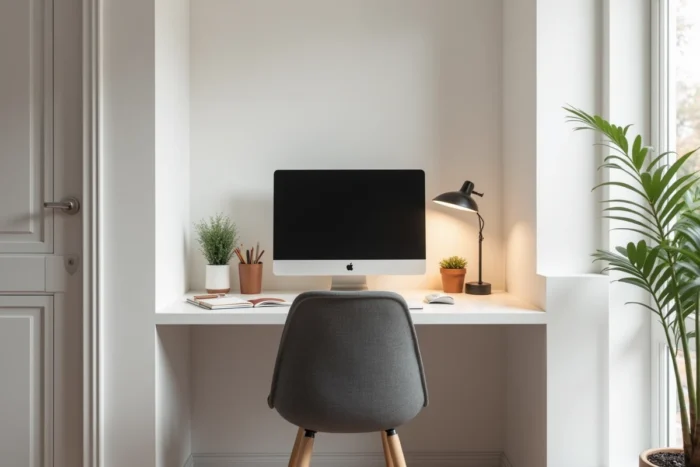
The organization of the desk also plays a role: a workspace cluttered with unrelated items (mail, remote controls, magazines) generates micro-distractions. A few chosen personal items contribute to well-being, but an overloaded desk hinders concentration.
Transition Rituals Between Personal Life and Work
Without a commute between home and office, the boundary between the two spheres fades. Some remote workers establish a ritual at the beginning and end of the day: tidying the desk, physically closing the foldable table, turning off the desk lamp. This closing gesture symbolically replaces the return journey and helps to mentally disconnect.
Creating a serene workspace relies as much on these habits as on the choice of furniture. Disabling work notifications at the end of the day is part of the setup just like choosing the chair.
Sustainable remote work requires an environment designed as a whole: thermal comfort, lighting, furniture modularity, digital management. Each of these parameters interacts with the others. A blind that blocks heat also modifies the lighting. A foldable desk necessitates rethinking storage. Addressing these issues one by one leads to shaky compromises. Tackling them together, from the design phase, creates a workspace where one can remain effective without sacrificing the comfort of the home.