Since July 7, 2026, the European regulation GSR 2 imposes a new series of safety equipment on all new vehicles coming off production lines. This third regulatory phase makes mandatory devices that were previously optional or reserved for certain high-end models.
At the same time, manufacturers are deploying software updates governed by the UN Regulation R156. Tire technologies and embedded sensors are advancing at a pace that alters the relationship between the driver and their vehicle.
Automotive Software Updates: A Regulatory Framework Still Unknown
Most articles on automotive innovation focus on sensors and driving aids. However, the software aspect remains a blind spot in the public debate, even though it conditions the operation of all other embedded systems.
The UN Regulation R156 governs the management of software updates for vehicles. The manufacturer must be able to identify each installed software version and ensure that the installation does not leave the vehicle in a dangerous state in case of failure or interruption. This framework applies to both over-the-air (OTA) updates and those performed in workshops.
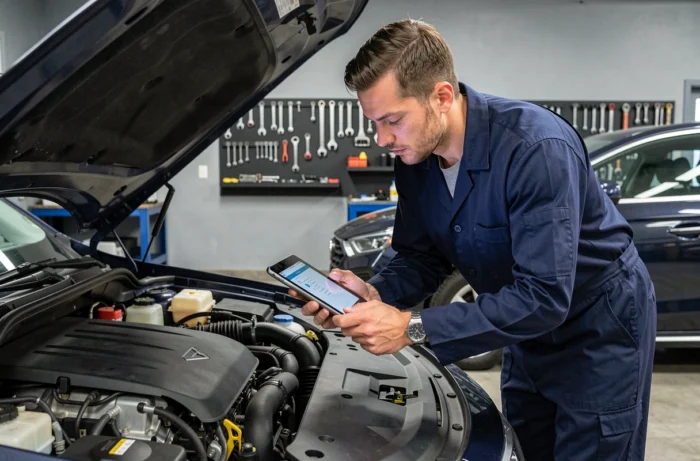
This requirement changes the game for routine maintenance. A vehicle whose update fails overnight, for example, must be able to restart in a safe functional mode. The resources available on systeme-auto.com help to better understand how these systems interact daily with the vehicle’s mechanics.
The open question concerns the duration for which a manufacturer commits to providing these security updates. The regulation imposes a process, but the software support period after the end of a model’s commercialization is not uniformly defined in the available regulatory sources.

GSR 2 Phase 3: What New Vehicles Will Feature Since July 2026
The GSR 2 timeline distinguishes the requirements applicable to new vehicle types from those aimed at newly registered vehicles. Since July 7, 2026, the third phase makes several devices mandatory across the entire new fleet.
Among the now-required equipment:
- An active driver vigilance monitoring system capable of detecting signs of drowsiness or distraction and issuing an alert
- An intelligent speed adaptation system (ISA), which informs the driver of the current speed limits – it is a warning device, not an automation that restricts the vehicle
- A connection interface for an alcohol interlock device, ready to be activated even if the interlock itself is not provided as standard
- A data event recorder (black box) that logs vehicle parameters a few seconds before and after a collision
A commonly misunderstood point: the ISA does not brake the car on behalf of the driver. The system displays the detected speed limit and can apply resistance on the accelerator pedal, but the driver retains the ability to override it. The distinction between alert and automation is central to the regulation’s design.
Next Deadline: Next Generation eCall
An additional step is planned for January 1, 2027, for next-generation eCall on passenger cars and light commercial vehicles. This automatic emergency call system, triggered in the event of a collision, must operate on communication networks newer than the 2G/3G network on which the current eCall relies.
Connected Tires and Embedded Sensors: Where Technology Stands
Tires represent the only point of contact between the vehicle and the road, making them a critical link for performance and safety. Manufacturers are now integrating sensors directly into the tire structure, beyond the classic TPMS pressure sensors.
These sensors measure internal temperature, tread wear, and grip conditions in real-time. The data is sent to the vehicle’s computer, which can adjust the behavior of the braking and stability systems. A tire that communicates its wear state alters the response of the ABS and ESP, which constitutes a tangible safety gain compared to a pressure sensor alone.

The current limitation of this technology lies in interoperability. A connected tire from manufacturer A does not necessarily transmit its data to the embedded system of manufacturer B. The lack of an open standard hinders large-scale deployment, and the available data does not yet allow for measuring the actual impact on reducing accidents related to tire conditions.
Digital Battery Passport: Traceability and Known Limits
For electric vehicles, the European Commission is introducing a digital passport for certain batteries. This electronic document must provide information on the chemical composition, capacity, charge history, and carbon footprint of the battery throughout its lifecycle.
The stated goal is twofold: to facilitate recycling at the end of life and to allow the buyer of a used electric vehicle to assess the actual condition of the battery. On paper, it is a transparency tool without equivalent in thermal automobiles.
However, the European Commission specifies that some carbon footprint data may not necessarily be required from the outset. The exact scope of the mandatory information at launch is still being defined, making it difficult to assess the immediate practical utility of the device for an individual buyer.
What the Passport Does Not Cover
The digital passport concerns the battery, not the entire electric powertrain. The condition of the electric motor, inverter, or thermal management system is not included in its scope. A used electric vehicle with a favorable battery passport may therefore present other wear points not documented by this device.
The accumulation of new regulatory obligations (GSR 2, R156, battery passport, next-generation eCall) outlines a new vehicle that is significantly more regulated than it was five years ago. The question is no longer whether these technologies are coming, but whether their actual deployment will meet the announced deadlines, and whether motorists will have the necessary information to benefit from them in their daily lives.