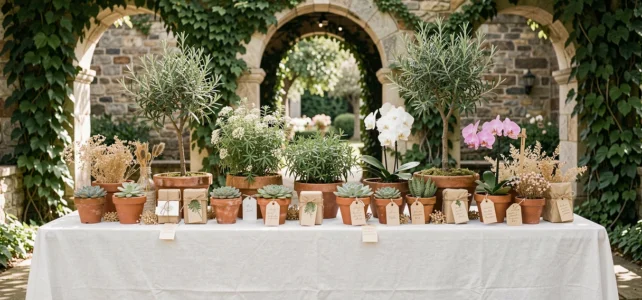
Giving a plant as a wedding gift is choosing a present that grows with the couple. The gesture goes beyond simple decoration: it combines symbolism, durability, and originality. However, not all species are equal in terms of maintenance, resilience, or meaning. This article compares ten specific plants, their strengths and limitations, to guide a choice suitable for the couple’s profile.
1. Potted Olive Tree: Longevity and Mediterranean Symbolism
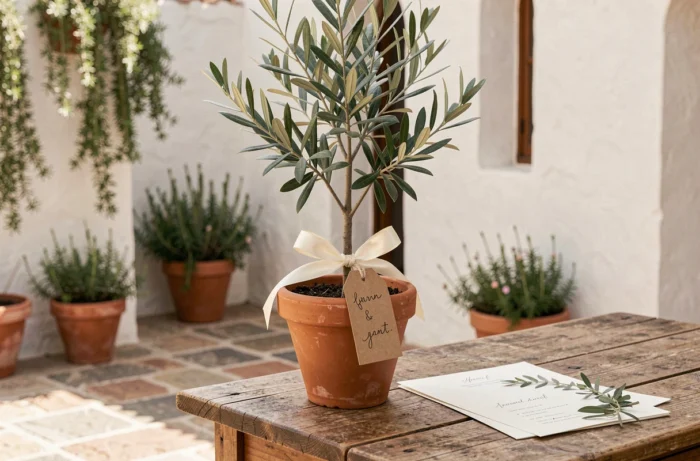
The olive tree has been associated with peace, wisdom, and longevity since ancient times. Capable of living for several centuries, it embodies a union that stands the test of time. A medium-sized potted specimen fits well on both a terrace and in a bright indoor space.
Its maintenance is moderate: infrequent watering, sunny exposure, and repotting every two or three years are sufficient. However, it does not thrive in dark apartments or rooms without direct light.
To find out which plants to give for a wedding according to MB Mariage, the olive tree is among the most frequently mentioned references due to its symbolic weight.
2. Mini Succulent: The Plantable Favor
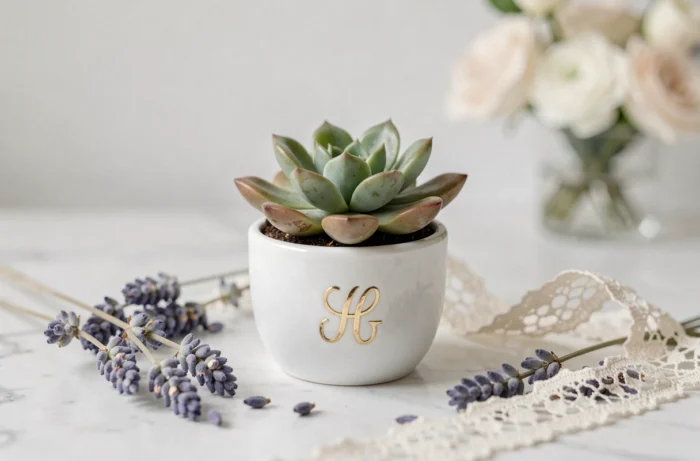
Miniature succulents have become a popular plant gift for guests. Sold in ready-to-distribute packs, they serve as living favors that each guest can take home.
Their main advantage: minimal maintenance. Watering every two weeks and indirect light suit them well. Their limitation lies in the perception of the gift, which can sometimes be seen as modest if the pot is not personalized with names or the wedding date.
3. Spathiphyllum (Peace Lily): Elegance and Air Purification
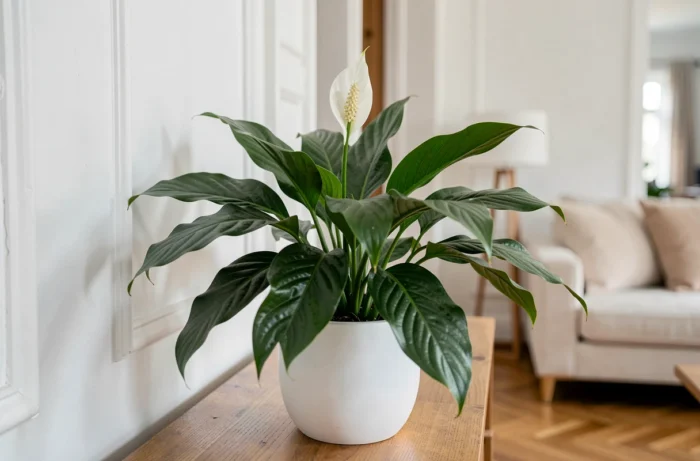
The spathiphyllum combines white flowers and dark green foliage, making it visually suitable for a wedding. It tolerates low-light interiors, a valuable point for couples living in urban apartments.
Its blooming returns each year without complex intervention. Regular watering and occasional misting are sufficient. Just avoid direct sunlight, which can scorch its leaves.
4. Crassula ovata (Jade Plant): The “Prosperity” Gift
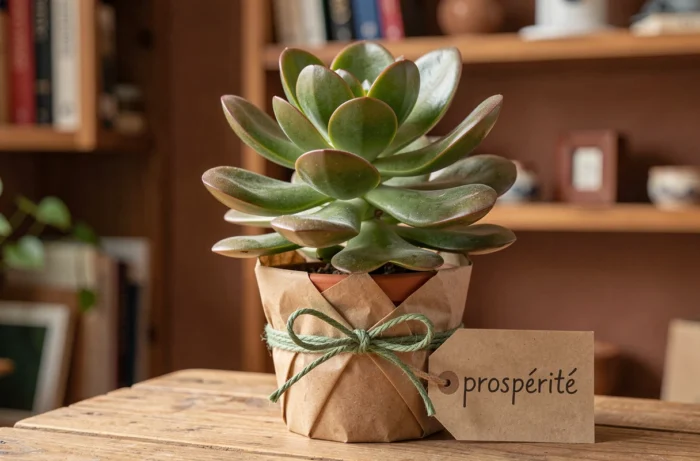
The jade plant is traditionally linked to prosperity and good fortune. Its fleshy, coin-shaped leaves reinforce this symbolism, appreciated in the context of a new home.
Its slow growth and drought resistance make it a low-maintenance plant. It can live for several decades in a pot. However, it is toxic if ingested by a pet, a point to check with the couple.
5. Hoya kerrii (Heart Plant): Romantic Foliage
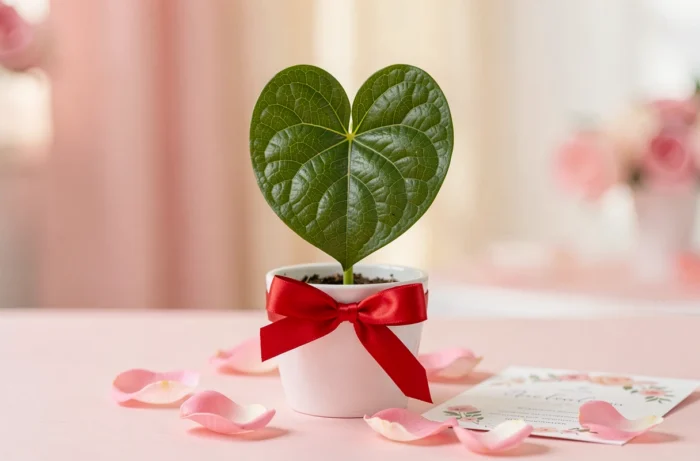
The heart-shaped leaf of Hoya kerrii makes it a visually explicit wedding gift. Often sold as a single cutting planted in a small pot, it plays on romantic aesthetics.
Note: a single leaf cutting does not always produce a full plant. To ensure actual growth, one must choose a specimen with at least one stem node. This detail makes the difference between a temporary decorative item and a lasting plant.
6. Sansevieria (Mother-in-Law’s Tongue): Maximum Hardiness
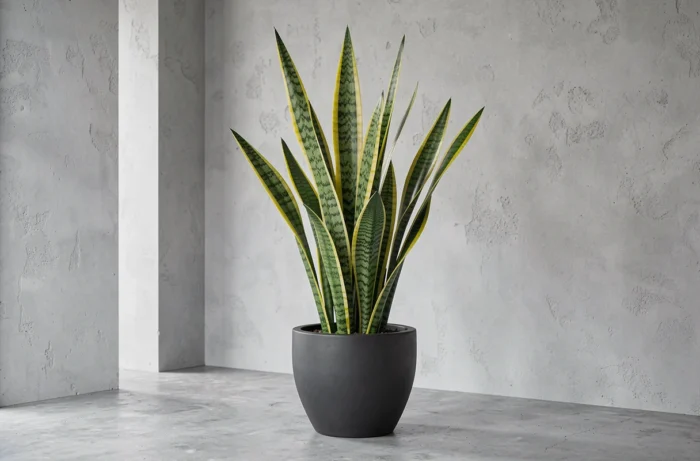
Sansevieria is among the most resilient indoor plants. It survives prolonged neglect in watering, tolerates low light, and requires almost no care.
Its graphic appearance, with upright leaves and striped patterns, fits all interior styles. It is the safest choice for couples who do not have a green thumb. Its only drawback: an unflattering common name, which some avoid by using the name “Dracaena trifasciata.”
7. Phalaenopsis Orchid: Classic Revisited with Personalized Cache-Pot
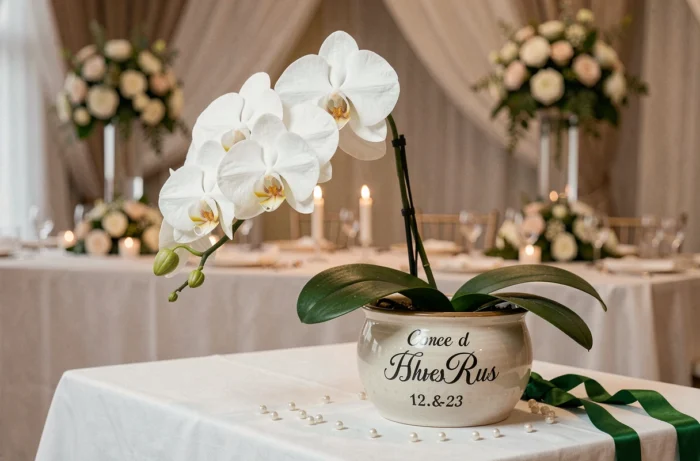
The orchid remains a common wedding gift, but personalizing the container makes it more original. A cache-pot engraved with the date or the couple’s initials transforms a common plant into a unique keepsake.
The Phalaenopsis easily re-blooms if the spike is cut after flowering and a temperature difference between day and night is maintained. Its lifespan indoors far exceeds that of a cut bouquet.
8. Plantable Pencil: The Gift That Germinates
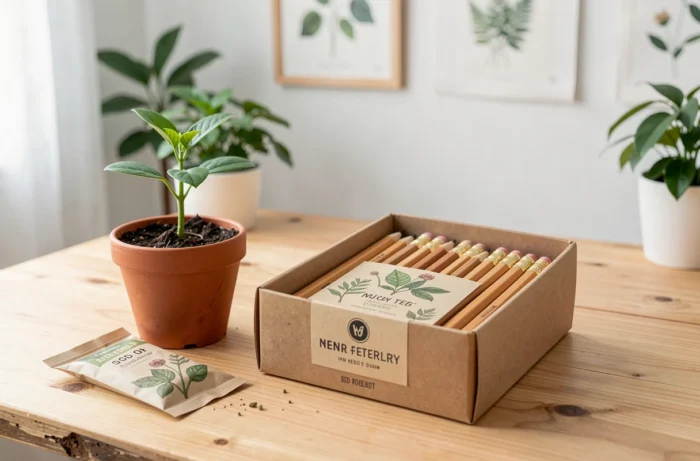
The plantable pencil contains a seed capsule at its end. Once too short to write, it is planted in the ground and gives rise to an herb or flower.
It is a light, easy-to-distribute, and transport gift. It is particularly suitable for weddings with many guests, where the budget per person remains limited. Germination depends on growing conditions, which means results may vary depending on the recipients.
9. Gardening Kit for Couples: Shared Experience
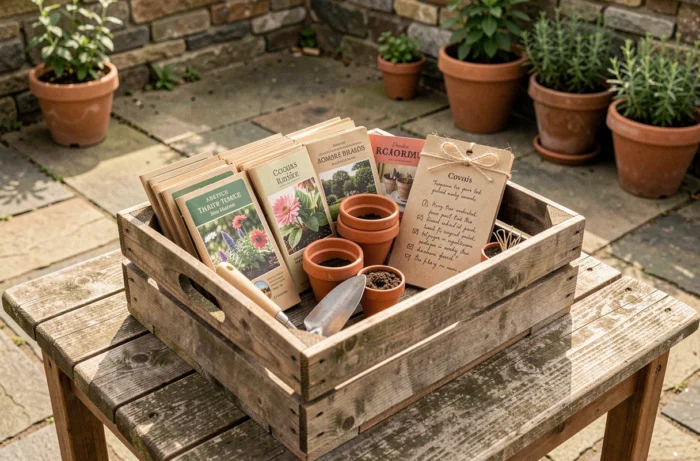
A kit combining pots, soil, seeds, and labels offers the couple a shared activity. The gift focuses on the experience rather than the finished object.
This format works well for couples with a balcony or garden. It loses its appeal for those living in a studio without outdoor space. The kit’s contents (herbs, flowers, vegetables) should be suited to the wedding season to ensure germination.
10. Seeded Paper Notebook: Write Then Plant
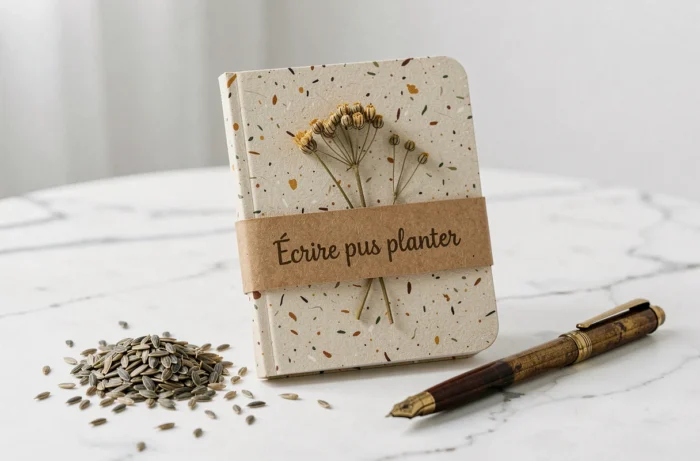
The seeded paper notebook combines a guestbook and a plant gift. Guests write their wishes in it, then the couple tears out the pages and plants them to grow flowers.
The paper must remain moist for several days after planting for the seeds to germinate. This practical detail should be mentioned in a companion card. The final result (poppies, forget-me-nots, basil) varies depending on the manufacturers.
| Plant / Item | Maintenance | Symbolism | Use |
|---|---|---|---|
| Potted Olive Tree | Moderate | Peace, Longevity | Main Gift |
| Mini Succulent | Very Low | Simplicity | Guest Favor |
| Spathiphyllum | Low | Purity | Main Gift |
| Crassula ovata | Low | Prosperity | Main Gift |
| Hoya kerrii | Low | Love | Symbolic Gift |
| Sansevieria | Very Low | Resilience | Main Gift |
| Personalized Orchid | Moderate | Elegance | Main Gift |
| Plantable Pencil | Variable | Renewal | Guest Favor |
| Couple Gardening Kit | Active | Sharing | Experience Gift |
| Seeded Notebook | Active | Memory | Plantable Guestbook |
The choice depends on the couple’s profile and the desired format. A main gift (olive tree, spathiphyllum, personalized orchid) is aimed at the couple. Plantable favors (succulents, pencils) concern the guests. Combining these two uses in the same wedding allows for a cohesive plant theme throughout the ceremony.