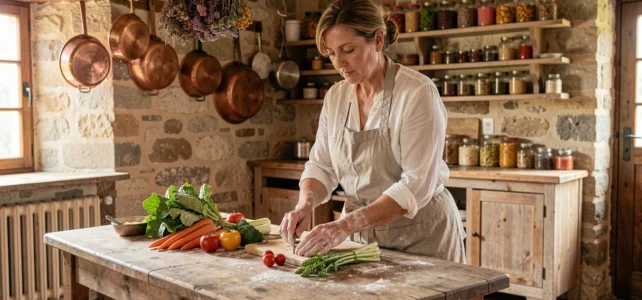
A traditional farmhouse refers to a small farmstead, often consisting of a main dwelling, agricultural outbuildings, and adjoining land. This type of rural building, inherited from ancient agricultural practices, is characterized by its local materials (stone, wood, cob) and a spatial organization designed for mixed farming and small-scale livestock raising. Today, these farmhouses attract interest for both their residential potential and their living environment rooted in the landscape of the French countryside.
Materials and structure: what keeps a farmhouse standing the test of time
The construction of a farmhouse relies on materials that were found in the immediate vicinity of the site. Depending on the regions, the walls may be made of limestone, granite, solid brick, or cob on timber framing. These choices were not originally aesthetic: they responded to constraints of cost and transportation.
The framework is the most revealing load-bearing element. In an old farmhouse, one almost always finds a traditional solid wood frame, custom-cut and assembled using mortise and tenon joints. The wood sections are wide, with local species (oak, chestnut, softwoods depending on the altitude). This design frees up a usable volume under the roof, unlike industrial trusses that grid the space with triangulations, making attics difficult to convert.
The thick load-bearing walls, often exceeding forty centimeters, provide natural thermal inertia. In summer, coolness is maintained without air conditioning. In winter, the mass of stone slowly releases the accumulated heat. This passive thermal behavior is part of the tangible charm of a farmhouse, beyond mere appearance.
Among the places that perpetuate this rural heritage by opening it up to dining and hospitality, La Fermette De Marie illustrates how an old built environment can combine architectural authenticity and everyday conviviality.
Farmhouse cuisine: local produce, self-sufficiency, and seasonal know-how
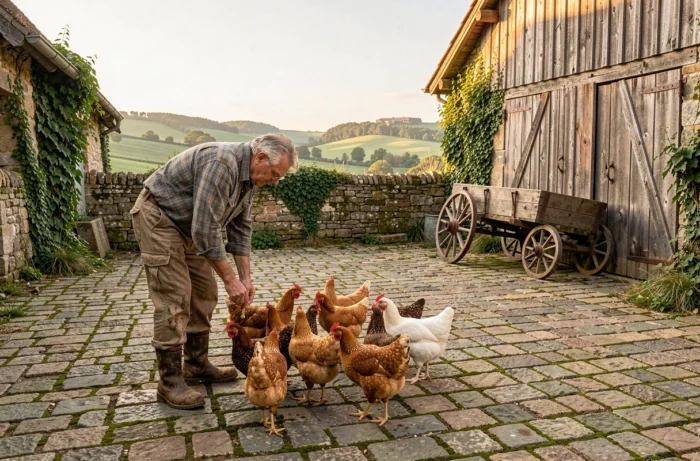
The cuisine of a farmhouse is not a marketing concept. It stems from a logic of food self-sufficiency that structured rural life. The vegetable garden, orchard, backyard, and sometimes a small cheese dairy or smokehouse provided the bulk of meals.
This short circuit operation persists in restored farmhouses as guesthouses or dining establishments. The flavors served depend directly on what the estate and its surroundings produce. Three elements distinguish this culinary approach:
- Strict seasonality: the menus follow the rhythm of the vegetable garden and local climate, which excludes out-of-season imported products and imposes creativity linked to current constraints.
- The use of heirloom varieties, often absent from large distribution channels, such as certain squashes, apples, or beans selected for their taste rather than their logistical yield.
- Inherited preservation techniques (lactofermentation, drying, jam-making, canning) that extend the availability of harvests well beyond the picking season.
This farmhouse cuisine is based on a simple principle: flavor comes from the soil and time, not from the recipe. A vegetable grown in open soil, harvested at maturity, and cooked on the same day produces a flavor that large distribution cannot replicate.
Staying in a farmhouse: what the rural setting concretely changes
Booking a stay in a farmhouse converted into a guesthouse or holiday rental is not the same as renting a room decorated in country style. The difference lies in the physical environment and the organization of space.
A farmhouse is generally located away from main roads, in a hamlet or on the edge of agricultural plots. Silence is a measurable fact, not an advertising promise. The absence of light pollution allows for observing a night sky that most urban French people have never seen.
The architecture itself structures the stay. Living spaces are often organized around a large common room, inherited from the peasant living area where cooking, eating, and heating took place. Exposed beam ceilings, terracotta or stone floors, and open fireplaces create an atmosphere that contemporary materials cannot replicate.
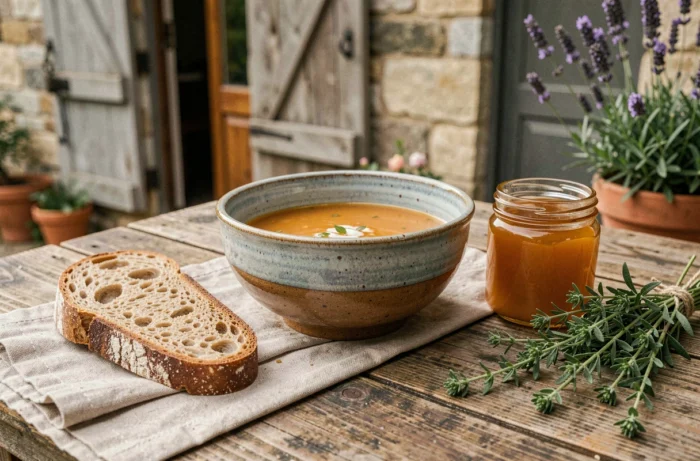
The outbuildings offer complementary potential: a barn converted into a reception hall, an old drying shed turned into a workshop, a stable transformed into a play area. This modularity makes the farmhouse suitable for both family stays and group gatherings.
Restoring a farmhouse in France: constraints to anticipate before purchase
The appeal of farmhouses to renovate remains strong in the rural real estate market. Listings abound in the heart of France, from Périgord to Normandy through Burgundy. The purchase price may seem modest compared to urban real estate, but the restoration budget often exceeds the purchase price.
Several technical points deserve attention before any signing:
- The condition of the framework and roofing: a roof in poor condition compromises the entire building in just a few seasons. The diagnosis should focus on the structural wood, joints, and waterproofing.
- The compliance of networks (autonomous sanitation, electricity, drinking water): in rural areas, connection to the sewer system is rare, and installing a compliant septic tank represents a significant expense.
- Regulatory constraints related to heritage: some farmhouses are located within the protection perimeter of a historical monument (castle, manor, church), which imposes specific materials and colors for any exterior modifications.
- The change of use of the building: converting an agricultural barn into a residence requires urban planning permission and sometimes a cadastral reclassification.
The proximity of a natural park or a classified site may also restrict extension possibilities. These constraints are not obstacles, but they significantly alter the budget and timeline.
A well-restored farmhouse retains its heritage value over the long term. Stone ages better than concrete blocks, generous volumes adapt to contemporary lifestyles, and the rural setting is a lasting asset in a real estate market where the search for calm and space remains strong.