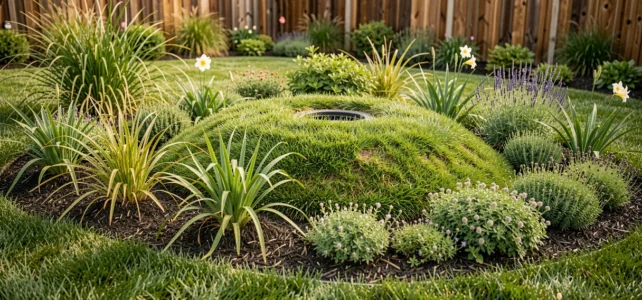
A septic tank occupies a significant area of the garden, and the temptation to plant vegetation or conceal it under decorative landscaping faces often underestimated technical constraints. The soil above the autonomous sanitation system remains a functional space: it ensures evapotranspiration, aeration of the drainage field, and access to inspection ports for maintenance. Any landscaping intervention must take these requirements into account, or risk compromising the treatment of wastewater.
Soil Hydraulic Saturation: The Real Factor of Malfunction
The choice of plants is crucial, but another factor weighs more heavily during inspections of existing systems: chronic soil saturation from surface water inputs.
Landscaping alters the circulation of water far beyond irrigation. Misaligned gutters, slopes that converge toward the drainage area, raised beds that retain rainwater: all these situations gradually drown the drainage field. Excess water prevents oxygen from circulating in the soil, and the aerobic bacteria responsible for purification cease to function.
Thinking about the landscaping of the septic tank thus begins with a diagnosis of the existing hydraulic landscape: where do the roof waters go, what is the direction of the natural slope, and whether an automatic irrigation system waters the area in question.
Some simple measures can reduce this risk:
- Keep downspouts at least several meters away from the drainage field, extending the pipes if necessary
- Maintain a slight natural slope that directs runoff away from the sanitation area, without creating a depression
- Abandon any automatic irrigation above the drainage field, including indirect spraying
- Avoid masonry borders or low walls around the area, which trap rainwater
Roots and Septic Tank: Which Plants Don’t Cause Problems
Roots infiltrating pipes or joints of the tank remain the most cited risk, and for good reason. A vigorous root system can crack an inspection port, clog a drain, or lift a cover in just a few years. In contrast, shallow-rooted plants do not threaten the installation if chosen wisely.
Herbaceous perennials with fibrous roots are well-suited: their root system remains in the top few centimeters of soil. Ornamental grasses serve the same purpose, with the advantage of quickly covering a large area without irrigation.
Plants to Exclude from the Sanitation Area
Trees and shrubs with deep or spreading roots pose a structural problem. Willows, poplars, maples, and spreading bamboos are among the most aggressive species for buried pipes. Even a tree planted several meters from the drainage field can extend its roots there if the soil is wetter than elsewhere, which is precisely the case around a sanitation system.
Removing a tree does not always solve the problem: dead roots leave galleries in the soil that can channel water unpredictably for several seasons.
Septic Tank Cover: Solutions to Conceal It Without Blocking Access
The septic tank cover and inspection ports must remain accessible for pumping and inspections. This is the most frustrating constraint aesthetically, and the one that generates the most errors.
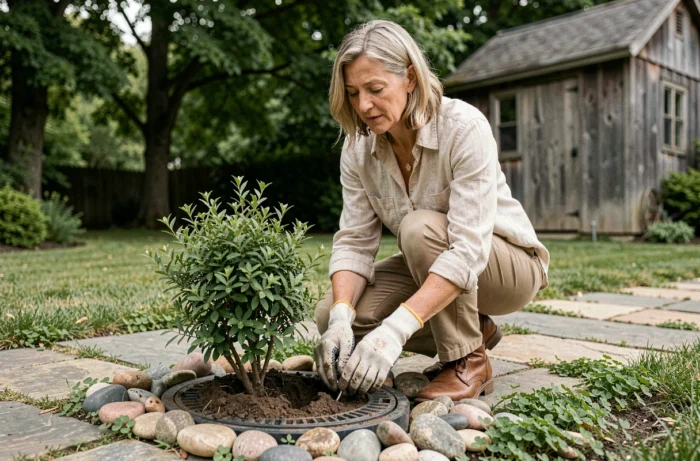
Installing a fixed wooden deck above the cover is a false good idea. The day the pumping truck arrives, the structure must be dismantled, which almost always damages it. A removable deck panel or a potted plant on wheels offers effective camouflage while preserving quick access.
Fake Rocks and Decorative Boxes
Fake resin rocks, designed to cover inspection ports, are a lightweight and easy-to-move option. Their appearance has improved significantly, and some models convincingly mimic local stone. Lattice wood boxes, placed without ground fixation, serve the same function with a more contemporary look.
In both cases, the principle remains the same: no fixed or sealed element above an inspection port. Everything must be removable in a few minutes by one person.
Flower Meadow on the Drainage Field: An Underestimated Option
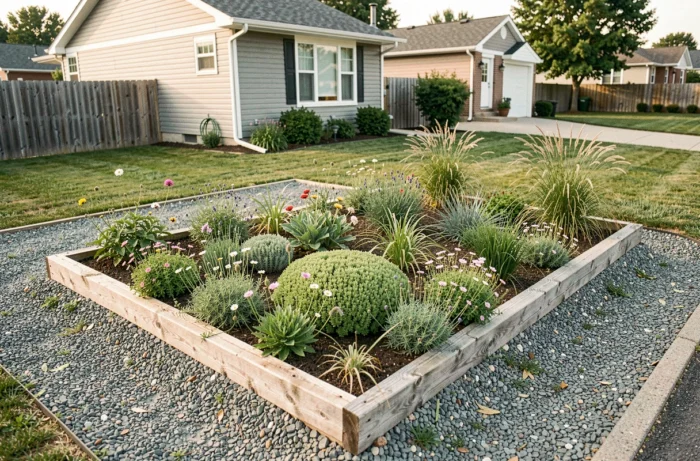
Transforming the drainage area into a flower meadow offers a concrete advantage: this type of vegetation cover promotes evapotranspiration without overloading the soil with water. Dry meadow seed mixes, composed of fescues, dwarf clovers, and annual flowers, thrive in poor, well-drained soil, exactly the conditions found above a well-designed drainage field.
The flower meadow requires neither irrigation nor fertilization. It is mowed once or twice a year. The lack of intensive maintenance reduces trampling and heavy machinery traffic, two factors of soil compaction that hinder infiltration.
The aesthetic result may disappoint in the first year, as establishing a meadow requires patience. The outcome from the second season more than compensates for this initial adjustment phase.
Soil Weight and Compaction: The Forgotten Constraint
Installing a permanent garden lounge, a storage shed, or concrete slabs above the drainage field gradually compacts the soil. Compacted soil loses its absorption capacity: water no longer infiltrates and stagnates on the surface or in the trenches.
This constraint automatically eliminates several common landscaping options. Slabs laid on a sand bed, compacted gravel, and hard structures have no place above the treatment area. Regularly mowed grass with a riding mower also poses a compaction problem if the soil is clayey or wet.
The basic rule remains to limit any regular passage of heavy loads over the drainage area, including vehicles during deliveries or garden work.
A successful landscaping project above a septic tank relies on three considerations: controlling the water that reaches the soil, choosing plants whose roots do not descend, and not fixing any permanent structure above buried elements. The rest is a matter of taste, provided that each decorative choice can be undone in less than an hour on pumping day.